Any Plant Can be Used for a Foundation Planting
Your foundation planting can be whatever you want it to be, but do first consider the function of a foundation planting. Add a small sitting area if you like, or include a fragrant herb garden. Use interesting texture or showy blooms. If you prefer a formal look, start with a pruned boxwood or evergreen hedge, and add less formal plants in front to transition to more casual areas of your landscape.
Take a critical look at your home all the way around. Determine what you might like to enhance or accent, identify areas that need softening or interest, and items that you would like to hide from view. Simple design principles can guide you in planning.
The Function of a Foundation Planting
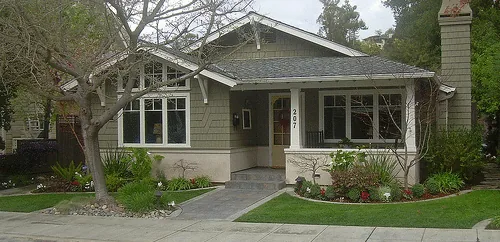
An important function of foundation plantings in cold climates is to insulate and provide wind protection, especially with a cement block foundation, and to cover less than appealing block. Northern gardeners may tire of yew and arborvitae, but evergreens are dense and do the best job of insulating and protecting from cold winds. Allowing some space between an evergreen planting and your foundation creates a dead air space that adds to the insulating benefits, reducing heating and cooling costs. The benefit is somewhat minimal, but it all helps. Evergreens also create a perfect backdrop for colorful shrubs and blooms.
In warmer regions, foundation plantings can be strictly ornamental, creating transition between the home and property. If there is not an unappealing foundation to cover, the plantings can be minimal. The home above is small scaled with a neutral foundation in a warmer region. The plantings are scaled to the home and limited to purely decorative plants, including perennials and annuals.
Functional benefits of foundation plantings:
- Add insulation and wind barrier
- Cover cement foundation, vents and faucets
- Add winter interest
Design benefits of foundation plantings:
- Add curb appeal and a welcoming feeling
- Anchor the structure of your home to the landscape
- Create a transition between structure and lawn
- Unify the home with the total property design
- A curved bed at angular intersections of concrete such as drive and walkways can soften the lines and draw attention to the entry area
Planning and Plant Selection
- Select slow growing, hardy, and long living plants so they don’t quickly become overgrown, requiring constant pruning or removal.
- Select plants appropriate for your zone, soil, and other regional conditions.
- Plants located under the eaves will not receive much if any rainfall. Plan to provide supplemental water or use more drought tolerant plants.
- Small to medium sized shrubs and plants are ideal for foundation planting. Larger specimens work well at the corners of the home, or where a large area of the planting bed sweeps out into the lawn.
- Be sure you know the mature size of your selections. Growers typically list the size of a ten year old plant as mature, but most of us keep a foundation planting well over 10 years and some plants may live 40 or more years. Allow enough space for the full size AND space to pass behind for maintenance to your home: up to 3 feet of passing space for smaller shrubs, and up to 5 feet for larger or tall shrubs. Space between the full size plants will help prevent disease.
- Allow space for meter reading access.
- Humid regions require more space between plantings and the home to allow good air circulation and avoid rot issues.
Design Considerations
- A formal design requires a symmetrical planting, neatly pruned. Your front foundation planting can be formal, or somewhat formal, and allow the sides and rear to be more casual. Plants can retain their natural form with a balanced design.
- The mature size of plants selected should be in scale with your home and property size.
- Avoid creating bookends at the corners of your home. Rather than cover the corner with a tall evergreen, plant it out and away from the corner to create a framing appearance.
- Foundation planting beds can flow from the house, along the sidewalk, and meet with the drive. Lining your driveway with showy plants only calls attention to the driveway and garage, which are usually not attractive elements of our designs.
- When using color in your foundation planting, try to use a color from your home. Repeat or blend colors from brick, shutters or trim paint.
- Plant selection should focus attention on the front entrance without crowding the entrance area, creating an open and welcoming feeling. Accents such as large containers of blooms and a door painted with an accent color can help create the focal point, and the same accent colors sprinkled into the planting beds create rhythm and unity.
- Windows and architecturally interesting elements should not be blocked with tall plants or ornamental trees. Reserve tall shrubs and trees for large open areas of the structure, or for softening the corners of your home.
- Try to avoid a single row of identical shrubs lined up along the foundation. Even a very formal foundation planting should use a variety of plants, textures, and layers, planted symmetrically or balanced.
Plant Guidelines
- Large trees should not be planted near the structure, to avoid overhanging limb problems, leaf drop into gutters, and roots encroaching on the foundation. Use large trees to provide backdrop for the structure.
- Small trees should not block view of the entry door, windows, or architectural details. Select a space with a large bare area of the structure, or near the corner. If you prefer an ornamental tree to partially screen windows for privacy, maintain a well pruned open structure. Allow for half the mature crown width plus passing space: if the crown reaches twenty feet wide, plant the tree 15-20 feet from the foundation. The planting bed may need to sweep outward to accommodate it.
- Large and tall shrubs and evergreens should be planted outside the corners of the home to soften and frame the structure, and should not be taller than the eaves. In front of a large enough expanse of open structure, a tall evergreen can work well with a two story house.
- Medium sized shrubs and evergreens should be the base of your foundation plantings. Medium is relative to the scale of your home, but generally around four feet high at maturity; five feet may be a bit large for many homes. Use the lower edge of your windows as a guide to the first layer. A little overlap is fine, but plants tall enough to block the windows will need consistent pruning.
- Small shrubs, perennials, annuals and groundcovers can be used in layers in a wide bed. Shrub roses are increasingly popular in foundation plantings. Spreading, low growing evergreens work very well in transitional layers. Perennials that bloom for short periods can create accents, but be sure the plant looks attractive out of bloom. An edging of annuals or groundcover that provides consistent color through the growing season can unify the shrub groupings.
Foundation Planting Ideas
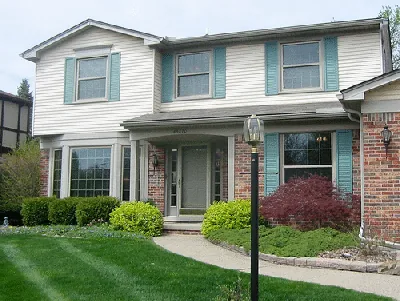
This foundation planting is fairly typical in the Midwest. Evergreen shrubs hide and insulate the foundation at left. In more sheltered areas like the corner of the home and garage, deciduous shrubs may be used. The front entry is accented by identical shrubs with bright foliage. A large shrub is used at the corner, but placed around the corner toward the side of the house, so as not to overwhelm the bay window area. The medium sized colorful shrub nicely balances the three evergreens on the other side, but should not be allowed to block any more of the window. A ground cover through the front of the beds unify the design. A cranberry painted door the same color as the shrub would add more focus to the entry area.
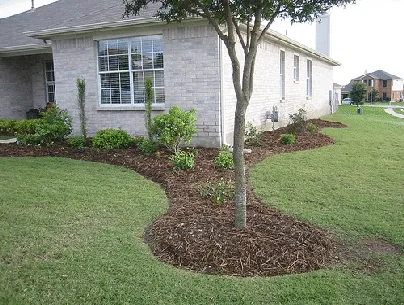
When your foundation planting does not need to cover a concrete foundation or add insulation, plantings do not need to be dense. Note that this newly planting foundation bed seams to leave plenty of room for plants to mature. However, some of these shrubs will mature well over four times the size they are now. They are too close to the structure to allow good air circulation and passing space. Pruning will be required in the near future. The tree has been planted a good distance from the corner, and included in the foundation bed by sweeping a curving island out to it. The tall narrow shrubs frame and accent the window without overpowering it.
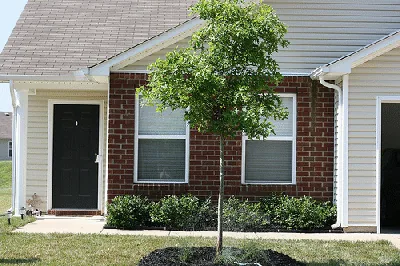
A typical development planting is very minimal and uninteresting. Four identical shrubs add visual weight to the already weighty brick section of the home. Further adding to the out of balance design is a young tree planted too close to the structure. It will someday be too tall to be in front of a single story home, and should have been placed well off to the left of the entry, to prevent the abyss of nothingness on that side. Move the tree quickly while it is young enough to manage and will recover from the transplant.
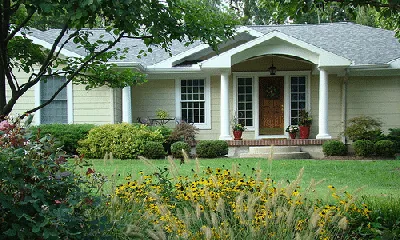
This is such a lovely foundation planting, interesting and well balanced. Beginning first with a somewhat formal home design, a few formal elements are introduced into the foundation planting with well pruned evergreen shrubs, placed symmetrically at the entrance. This also maintains a very open and inviting entry space, and draws attention to the front door. Additional shrubs are less pruned and not symmetrical, adding color and texture, creating a perfect transition to casual gardens. The strong horizontal lines of the home’s design is repeated and reinforced by keeping the foundation planting low and continuous in another strong horizontal line. The vertical pillars and tall narrow windows prevent the horizontal lines from overpowering, without interrupting, the horizontal architecture like strong vertical evergreens would.
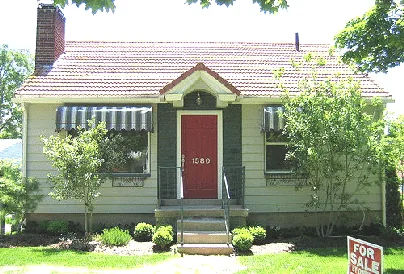
There is a pretty good chance the owners of this house for sale just completed the foundation planting to show the house. It actually looks fairly well designed right now, but it won’t last. The small globe shrubs cover the concrete foundation of the entry steps, but in only a couple of years will overgrow the steps. It is difficult to see, but there are also small plants literally right up against the foundation. They will all have to be removed soon. The two small trees are young with an open crown right now, but will soon completely hide the house. It is an adorable house and planting design, but move all the plants quickly before they are well rooted.
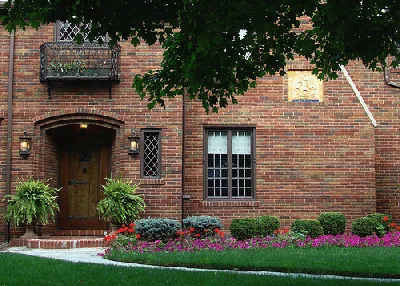
A lovely, somewhat formal, arrangement of shrubs and annuals does not quite hit the mark. It looks out of scale with the size of the home. It can be simply corrected by adding a little visual weight to balance with the structure, and add vertical interest. A larger shrub could replace the two small arborvitae to the right of the window. Then add a tall conical just to the right of the corner past the window.
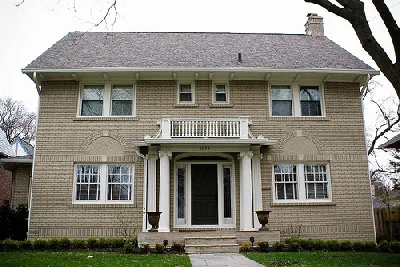
The foundation planting of this beautiful home does absolutely nothing to enhance the structure. A straight line of tiny identical shrubs creates no interest and is completely out of scale with the size of the house. Don’t be tempted to just expose your beautiful home. Enhance it!
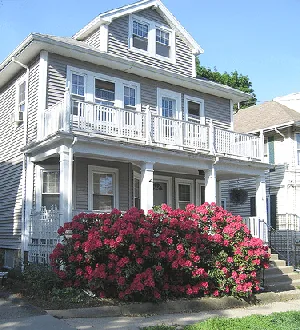
This is difficult. The rhododendrons are drop dead gorgeous. But when they are out of bloom do they do anything to enhance the home? As difficult as it would be to remove these beauties, the year round interest of a decorative foundation planting should at least be considered. Perhaps if one plant at the entrance step was kept, and try to find a place elsewhere for the others. Unfortunately there does not appear to be much space on the other side to flank the stairs. The home itself is so lovely it does not need much enhancement, just a transition anchor. Start by adding small evergreen shrubs on both sides of the home to provide a little balance.
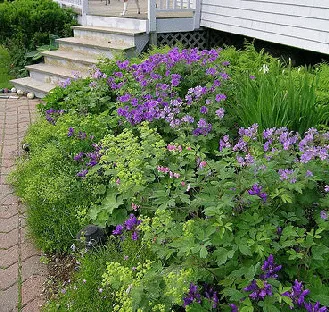
A foundation planting at the side or rear of the home can be much more casual. This perennial planting is wonderful.
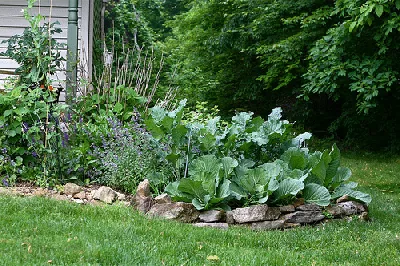
A casual or country home design is appropriate for casual or cottage plantings at the foundation. Especially at the corners of the home to transition to side and rear gardens, you can even include a kitchen garden or fragrant herbs.
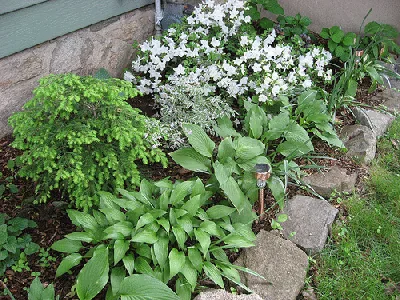
A foundation planting at the side or rear of your home is a perfect place to include small shrubs, perennials or annuals, and texture. This mixed border is an interesting composition with a weeping hemlock, hosta and blooming shrubs for year round interest.