Best Low Maintenance Perennials
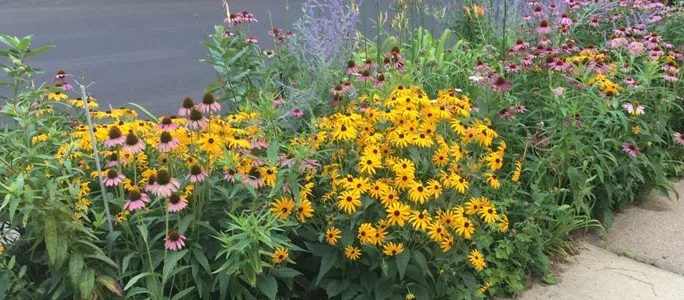
Nearly every plant needs at least a little care from a gardener. There are exceptions of course: many native plants exist beautifully with no more than Mother Nature to provide care. I would encourage you to investigate native plants from your region, which are typically low to no maintenance. They can easily be incorporated into your perennial beds, or you can start a native garden that will thrive quite well without you in all but the most extreme conditions.
Most of us love to plant cultivated perennials or hybrids, and foliage plants. But we all need some low maintenance plants so we can devote more time to pampering a few garden divas, or to enjoy something else entirely. So just what does it take to qualify as low maintenance? That might depend on your perspective, but here we focus on those that require only the most basic of care.
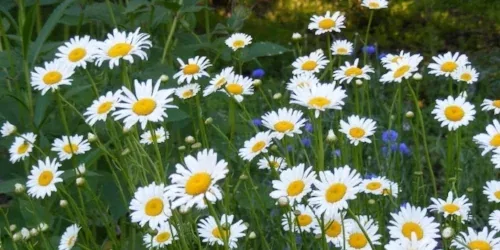
Even a low maintenance plant absolutely must be planted in its preferred environment, otherwise it will need special attention to thrive in what it considers adverse conditions. If you plant low maintenance Sweet Woodruff in dry soil you now have a high maintenance plant, and you will be constantly watering it to keep it alive, much less thriving. So pay attention to what the plant needs and be sure you select the right planting site.
What Makes a Perennial Low Maintenance?
- Strong stems that do not require support or staking
- Does not require deadheading. Removing spent blooms to encourage more blooming can be time consuming.
- Does not require frequent division to keep them healthy and blooming.
- Requires little or no fertilizing.
- Self seeding can go either way, so decide which way it will go for your planting site. Self seeding plants will multiply and spread, which can be a good thing for a contained planting site. Or will it cause you to constantly be removing seedlings?
- Plants that spread by underground rhizomes can also be good or bad. Evaluate your planting site and be very careful to avoid those that can be invasive.
- Disease and insect resistant. Find out which insects or diseases are rampant in your region.
- Tolerant of summer and winter weather extremes typical of your region.
- And if we haven’t already asked enough of a plant, it would be nice if it is pretty all the time, even when it is not blooming.
Not every low maintenance plant can meet every characteristic on our wish list, so each gardener needs to decide which maintenance items are most acceptable.
Low Maintenance Perennials to Grow
I have selected just a few perennials to call the best low maintenance perennials for a number of reasons. They possess all or most of the characteristics of low maintenance, they are super easy to grow and they all produce wonderful blooms or great looking foliage. As I alluded to earlier, some need just a little something from you to perform their best.
Peony
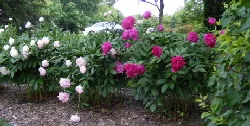
Peony produce absolutely massive numbers of large full blooms every single spring without fail. Once established in full sun and well drained soil they require virtually no care. You will have enough flowers to bring armloads in for vases. Some gardeners prefer to clean up the plant by cutting back the stems of spent blooms, leaving behind a rich deep green shrub of foliage. Every 15 to 30 years you may need to divide the plant if blooming diminishes.
Hosta
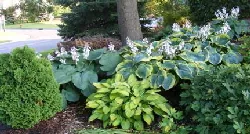
Hosta are wonderful for shade gardens, adding a great variety of texture and color where shade makes it difficult to grow flowering plants. Late spring brings tall stalks of lily like flowers of white, blue or lavender. Most hosta require little or no care, but each variety has different preferences. Make sure you select what you really need for your planting site to ensure required care is minimal. Some tolerate dry shade, some prefer moist shade, some will put up with full sun and others will wilt under too much sun. Most rarely need to be divided unless you want to produce more plants, some multiply on their own quite rapidly.
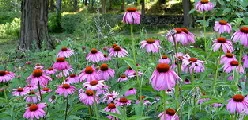
Coneflower
Hosta are wonderful for shade gardens, adding a great variety of texture and color where shade makes it difficult to grow flowering plants. Late spring brings tall stalks of lily like flowers of white, blue or lavender. Most hosta require little or no care, but each variety has different preferences. Make sure you select what you really need for your planting site to ensure required care is minimal. Some tolerate dry shade, some prefer moist shade, some will put up with full sun and others will wilt under too much sun. Most rarely need to be divided unless you want to produce more plants, some multiply on their own quite rapidly.
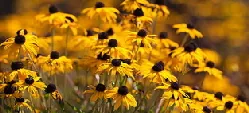
Black eyed susan
Black Eyed Susan, or Rudbeckia, are a touch native perennial that tolerates a wide range of conditions and neglect, and still blooms all season long. Perennial Rudbeckia (there are also annual and bi-ennials) are very easy to grow and free of pests and disease. They like reasonable good soil but are very tolerant of clay. ‘Goldsturm’ is a low maintenance favorite.
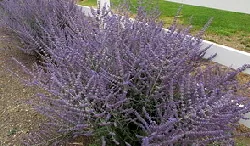
Russian sage
Russian Sage Perovskia is excellent for neglected areas. The shrub like perennial produces fragrant silver blue stalks of tiny blue lavender flowers in mid summer. Plant it where nothing else will grow, where you can’t reach it with a hose, where it bakes in the sun all day, and it won’t mind a bit.
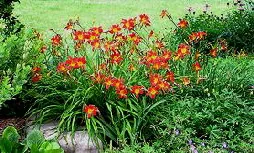
daylily
Daylily Hemerocallis is often called ditch lilies for good reason. The old fashioned daylily will multiply reasonably and are virtually indestructible. They prefer full sun and well drained soil but really are not fussy about much of anything. All daylilies will benefit from occasional dividing and perhaps just a little fertilizer in spring. There are many new varieties that offer a multitude of different color options. The newer varieties and hybrids do not spread as quickly but some are not quite so tolerant of neglect and poor conditions. And the reblooming daylilies will need deadheading to encourage new blooms. But still a very low maintenance perennial. Of the new varieties ‘Stella de Oro’ and ‘Pardon Me’ are among the easiest care.
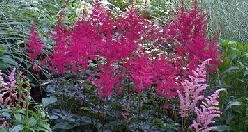
astilbe
Astilbe are an elegant flowering shade perennial. Most prefer moist soil, The chinensis is much more tolerant of variable soil moisture and heat. ‘Rheinland’ is probably about the easiest of all to grow. Astilbe can live up to 10 years if you plant it in preferred conditions. Every few years you may want to divide to maintain good health and blooming. Deadheading some varieties will encourage a second flush of blooms.
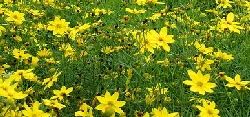
coreopsis
Coreopsis are not bothered by heat or dry soil, so neglected areas of your landscape are ideal locations for these bright and cheery blooms. These native perennial wildflowers are tough and hardy, the only thing they don’t care for is consistently wet soil. Full sun encourages the most prolific blooming and fertilizer is not necessary. ‘Moonbeam’ and ‘Zagreb’ are the best for low maintenance and prolific blooming.
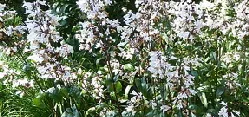
Penstemon
Penstemon, or Bearded Tongue, is drought tolerant but also tolerant of moist conditions. It prefers dry well drained soil in a sunny spot, but is not overly fussy about it. Poor soil is also tolerated. Tubular flowers on tall stalks are produced prolifically in spring and the foliage remains fresh through the growing season.
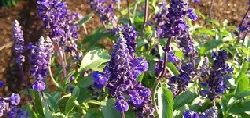
salvia
Salvia is easy to grow and tolerant of heat and drought. It blooms from midsummer to fall with spires of pink or lavender blue mini flowers. Deadheading is unnecessary unless you prefer to neaten up the plant after blooming. Occasional division may benefit the plant.
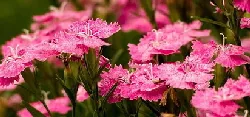
pinks
Pinks, or Dianthus are in general very low maintenance when planted in full sun and well drained soil. Occasional water and division every few years is about all most of them need. But there are hundreds of different pinks and they do not all have the same needs. The species plants are tough, easy and require virtually no care, look for Fringed Pinks ‘Sternberg’s Pink’ or ‘Crimsonia’, Maiden Pinks ‘Brilliant’ or ‘Arctic Fire’, Cheddar Pinks ‘Bath’s Pink’ or ‘Firewitch’.
Don’t stop with this list though, browse all the perennials that are grown in your region to find those that only require what you decide is easy maintenance. Your local garden center is usually very helpful with this kind of information.