Island beds can make a big impact in your landscape
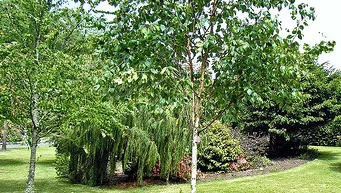
Although there are no real rules to creating an island bed, there is a lot to consider in the planning. We have all seen the little circle cut into a yard with some plants and a whirligig plunked into it. With careful planning, you can create an island bed that adds interest to your landscape.
Strictly speaking, an island bed stands alone and is not connected to other elements of the landscape such as your home, driveway, or along a fence. An island bed is constructed on the “flat of the land” using plants to add height. They simply float in the lawn like an island. (Although with the days of formal gardening gone, the once formal island might now be built up like a berm or adjoined to the drive or sidewalk.) These are precisely the reasons we have seen such unattractive island beds. They have no design support from adjoining features of your landscape, there is no hiding smack dab in the middle of the lawn, and no relief from view, as typically they are easily viewed from all sides. So your really need to do it right. A few guidelines will make it easy.
Size and Shape
An island be can be any shape you chose - round, square, octagon, crescent or kidney. It can be a irregular flowing shape, perhaps mimicking other shapes in your landscape to unify it with existing elements. To allow for easy mowing, create wide sweeping curves that are easy to navigate.
An island’s size should be scaled appropriately the viewing distance. Since an island can typically be easily viewed from all sides, use the primary or most important vantage point. In front of the home, that would usually be your front entry. But if your island will be placed near the street on a large property, use the entrance to the property instead. Then create an island width that is half the distance from the viewing place. Remember that this is only a guideline. For example, to create an island near the street that will screen out the street view from the home you might have a viewing distance of 30 or 40 feet from your home and a viewing distance of 5-10 feet from the street. So do you construct your island 5 feet wide or 15 feet wide? Form always follows function, so first remember the purpose of the island and create it the size it needs to be to perform the function. Then consider the guideline, then go with your instincts and do what you like best. If the island bed is strictly decorative, consider the space available and the scale of surrounding planting areas.
Plants and Design
An island bed should be designed for viewing all the way around. Select plants with greater height for the center and low growing plants or groundcovers for the outer edge. But don’t use plants so tall that you block desired view. Remember your design principles for plant selection and placement. Select plants with some similarity of color texture or form for unity. Balance the overall design with size or “visual” weight. Plants should be in proportion or scale to the size of the island and other elements of the landscape. Create rhythm to lead the eye through and around the island by repeating a color, shape or texture. And don’t forget to consider the visual interest of the changing seasons. If you are using perennials consider the bloom periods and perhaps splash in some annuals. Consider what might create interest in early spring, late fall and even winter. But most important, as always, is creating a plant design that pleases you!
Maintenance
Some maintenance will of course be required, how much will depend on your plant selections and the size of the island you create. If you don’t want to spend too much time with maintenance, create a smaller island and use primarily well healed shrubs and an ornamental tree.
Island beds are easily accessed for maintenance all the way around. But if you create an unusually large island, be sure to allow walk space or add steeping stones into the center of the island.
Finish the island well by edging. Whether you use landscape edging or a narrow crisp trench, edging will prevent the lawn from creeping into the bed and give it a professional finish. Accent your edge with stones or plants.
Accents
Island beds are perfect for accents such as birdbaths, statues, urns or trees. Garden structures, accents and accessories will also provide year round interest that is difficult to achieve with plants alone. Be sure to see the pages about Using Accent Structures and Using Garden Accents for design help.
Island Bed Ideas
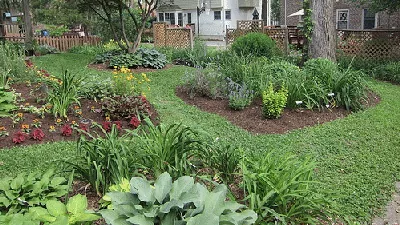
A good example of traditional island beds. Each bed is in good proportion to the space available, and the plants in each are well balanced and provide interest from every angle. The bed in front adjoins a drive, with the plants positioned for best viewing from the drive entry. Each bed contains a different combination of plants and each is neatly edged with simple trenching. Together the beds create an English style strolling garden.
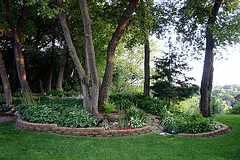
A common use for island beds is to accent trees where it is difficult to mow and maintain lawn. Simple low maintenance plants create a woodland garden feeling. The low wall edges the bed and draws attention to the simple setting, and a break in the edging invites visitors onto a strolling path, which also gives access for maintenance in the large bed.
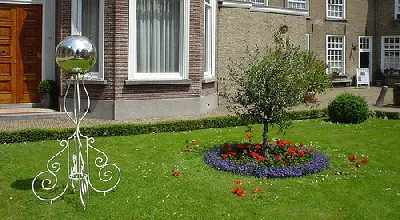
An island that seems too small for a large property is actually nicely scaled to the dwarf tree. But the three small items in this view seem unrelated and abrupt. Widening the bed to include the dwarf tree and the gazing ball would unify the individual accents and create a nice flow, and filling the bed with groundcover rather than larger plants would keep the minimalist theme.
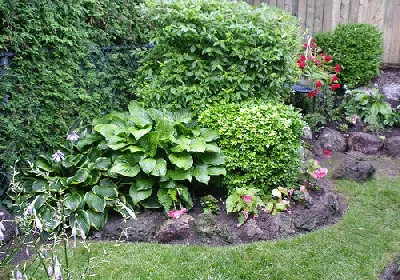
A nontraditional island flowing from a property fence does many jobs in this back yard. Dense planting turns what could be a boring fence into a neutral, unifying backdrop to flowing lush beds. Tall arborvitae at left screen a cozy patio, and the flowing beds create strolling pathways while minimizing lawn maintenance. The plants are a symphony of texture and shades of green, mostly low maintenance, with splashes of color that draw the eye from one grouping to the next. The edging is a narrow trench, and the slightly built up beds are retained with rock. Beautifully done!
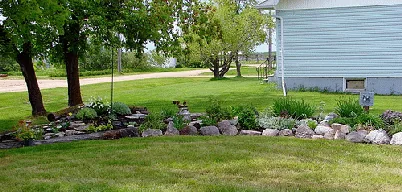
This island is a focal point, drawing attention to two lovely trees. It is so simple, yet with so much happening. Just a few plant types are repeated throughout. Rock and boulder are used as edging, as transition between planting areas, to create raised areas, and again in the stone steppers. Very little color is used, but a great variety of texture creates interest.
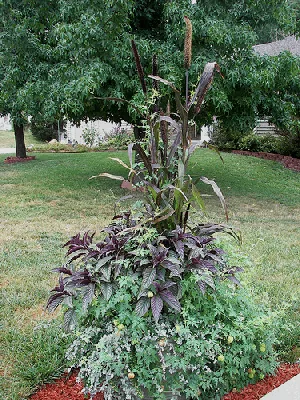
A stunning composition of plants creates a fabulous focal point island bed. The only problem is that a focal point should draw attention to something important in the landscape, such as an entry or the perimeter of a space. Placed on the inner side of the drive, it looks misplaced. On the other side of the drive, at the street entry, it would create a lovely entrance to the property.
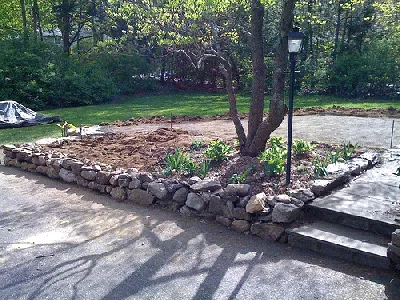
An island garden is a perfect way to soften hardscaping and break up large expanses of hard surface. In this work in progress, bolder wall edging creates a great transition from concrete to plants, the tree will become a focal point in its well scaled bed, and more plants will partially screen the entry patio and give it a cozy feeling.
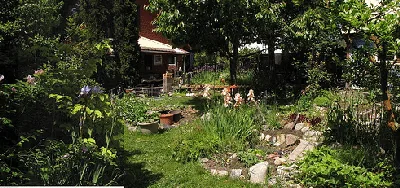
What gardener among us hasn’t fallen into the trap of trying to include one of everything they love? This landscape of berms and islands has a wonderful design composition, but has lost simplicity and unity as it developed. Reducing the variety of plants, or regrouping them into clusters, is a good place to start. Crisply edge the beds, since everything seems to run together here. Unify the beds by selecting one plant to flow through or around them: the low growing edging plant in the right foreground could be used through all the beds. Pots and garden accessories should be “peeking out” of the foliage, or placed to call attention to important plants or the entrance to a path.
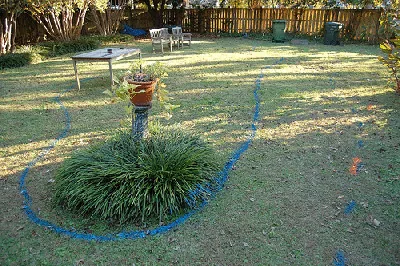
Newly acquired property may give you a clean slate, and what little landscaping does exist can be a starting point. This property owner is using temporary yard marking spray paint to try out island bed layouts, starting from a healthy, happy ornamental grass and the pedestal of a broken bird bath.
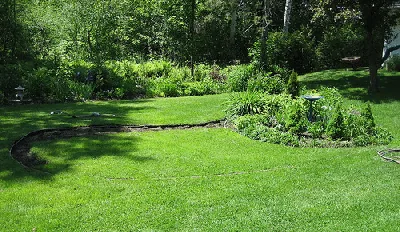
That big project you did a few years ago is great, but it always seemed dwarfed by a large property. You have had your rest now, just expand it!